Climate Week NYC: From Climate Ambition to Real-World Action

By Juan Camilo Plazas Ovalle

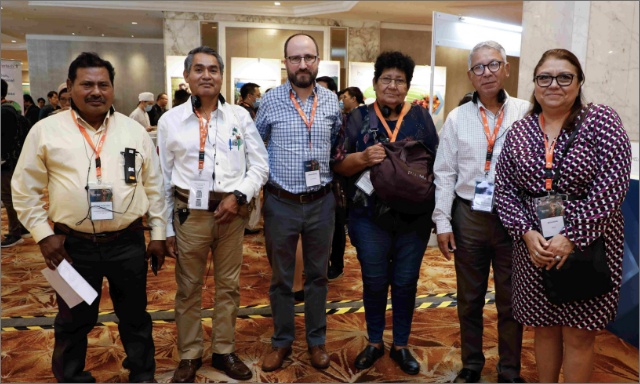
From 20 to 27 September, New York City became the meeting point for a global conversation about climate action. As governments, businesses and civil society gathered for Climate Week NYC 2026, one theme stood out: the need to fight to maintain climate ambition and to accelerate action, even when some leaders take steps backwards. The RSPO joined that conversation, bringing the experience of sustainable palm oil to a global discussion increasingly focused not only on what companies commit to, but on how they deliver.
Climate Week NYC is the world’s largest climate event and a global platform for advancing climate and economic progress at scale. It brings more than 100,000 people together across more than 1,000 events throughout New York City, connecting global leaders shaping markets and policy with communities driving change on the ground.
In 2026, the conversation centred on three interconnected themes: energy, impact, and action. The message from Climate Week was clear: the challenge is no longer ambition, it’s about real implementation.
Climate and sustainability commitments are becoming increasingly widespread, and some are being withdrawn or reduced. However, there are still many organisations that are turning ambition into measurable progress. This progress can’t be done alone if we want to see impact at the scale needed. This requires credible data, practical systems, and accountability across the supply chain to ensure that commitments are translated into meaningful action.
Bringing Sustainable Palm Oil into the Climate Conversation
Representing the RSPO, Cameron Plese, Head of Government Affairs for North America and Europe, joined representatives from leading sustainability and certification organisations, including the Rainforest Alliance, Forest Stewardship Council (FSC), B Lab, and Verra for a panel discussion exploring how certification systems can help companies move beyond sustainability and climate commitments and turn them into meaningful action at scale.
For Cameron, the value of certification extended beyond compliance or providing a trusted statement. Credible third-party systems could help companies understand their impacts, verify progress, and put sustainability commitments into practice across their operations and supply chains.
“Across many events and meetings during Climate Week, there were many mentions of trust being the most valuable currency for sustainability commitments,” said Cameron. “Third-party certifications, as well as compliance to standards and reporting built through multi-stakeholder platforms, provide a level of credibility and trust that can’t be achieved when many companies go alone in different directions. Credible and scalable impact comes from inclusive and collaborative approaches that bring everyone together through a shared responsibility.”
“Third-party certifications, as well as compliance to standards and reporting built through multi-stakeholder platforms, provide a level of credibility and trust that can’t be achieved when many companies go alone in different directions.”
This discussion reflects an important evolution in the sustainability conversation. As expectations around corporate climate action continue to rise, companies are increasingly being asked not only to state what they intended to achieve by themselves, but to demonstrate the impact that can be seen from communities to large ecosystems. For agricultural commodities such as palm oil, this distinction is particularly important.
Palm oil sits at the heart of global supply chains, connecting millions of producers and workers to markets and products used around the world. Ensuring that palm oil is produced responsibly is therefore not a peripheral issue, but an important part of addressing the broader climate and sustainability challenges facing the world.
Open letter to COP30: Placing forests and biodiversity at centre of climate policy
The discussion in New York also echoed a message the RSPO had brought to the global climate agenda ahead of COP30.
In an open letter to the COP30 Presidency, the RSPO called for forests and biodiversity to be placed more firmly at the centre of climate policies and national climate plans. The organisation also called for a shift from voluntary action towards stronger policy frameworks capable of addressing deforestation, land-use change and biodiversity loss.
The letter highlighted a fundamental point: protecting forests and biodiversity cannot be the responsibility of individual companies alone. Governments, businesses and other stakeholders need to work together to create the policies, incentives and systems capable of driving change at scale.
That same principle resonated throughout Climate Week: while commitments matter, their real value is measured by what happens beyond the global stage. Across farms, forests, mills, factories and supply chains around the world, climate ambition must translate into action and measurable progress.
For the sustainable palm oil sector, this meant continuing to strengthen responsible production, protect valuable ecosystems, and create pathways for producers and companies to contribute to the transition, while enabling smallholders and actors across the entire supply chain to grow, strengthen their livelihoods and expand their access to markets through sustainable practices.
About the author: Juan Camilo Plazas Ovalle is the RSPO Communications Manager for the Americas. To get in touch, email: [email protected]
Keep reading

Elevating Integrity and Governance: RSPO Assurance Standing Committee Mid-2026 Progress

Decarbonizing Oil Palm: An Opportunity That Begins with Crop Nutrition

NOTICE FOR THE 23RD GENERAL ASSEMBLY

Faces of the Amazon: The People Behind Sustainable Palm Oil in Ecuador

From the Ground to Governance: How a Corporate Initiative Became the Driving Force Behind the Restoration of the La Pasión River Basin

Important Notice: Discontinuation of RSPO Self-Learning Courses for 2024 P&C and ISH Standard

prisma New Modules Socialisation, Training and RT Clinic Sessions Sign Up October-November 2026

ACOP 2025 Market Insights: Navigating Structural Shifts and Regulatory Dynamics